
The Gulf War and the Breakdown of Predictability
The U.S.–Israel–Iran conflict exposes a dangerous gap between military capability and confidence in restraint. An Optimal Trust analysis identifies where clearer limits and working channels could reduce the risk of escalation.
TrustQ Executive Brief • March 4, 2026 | OT scoring snapshot March 3, 2026
March 2026 analysis edition • Sources verified October 5, 2026. This brief retains the early-war information horizon; it is not a current situation report.
What happened
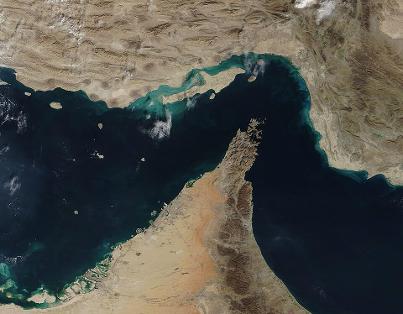
Within days of the opening strikes on Iran, the conflict was disrupting the commercial systems that carry the Gulf’s energy exports. Ships were waiting, insurers were rewriting terms, and businesses were confronting a question military communiqués could not settle: how far would the war go?
The United States and Israel began their coordinated attack on February 28. Iranian state media confirmed early on March 1 that Supreme Leader Ali Khamenei had been killed. Iran retaliated against Israel and targets across the region. The leadership loss complicated an already urgent problem: identifying who could receive a warning, authorize a response, or make a commitment that others could rely on. [1, 2]
By March 3, Lloyd’s List reported sharply reduced transits through the Strait of Hormuz and QatarEnergy’s halt to LNG production following attacks. A threatened passage can constrain trade even when ships remain physically capable of crossing it: owners, crews, charterers and insurers must each accept the voyage. [3]
The insurance detail matters. Gard’s March 1 notice set a March 5 effective date for cancellation and automatic reinstatement with an exclusion for specified Iranian and Gulf waters. That is a regional war-risk restriction, rather than the disappearance of all insurance. The commercial consequence still depends on the actual policy, replacement cover and voyage approval. [4]
The TrustQ thesis
The central OT finding is a weakness in intentions and communications. Adversaries can recognize one another’s military competence while doubting every assurance about restraint. In that setting, a limited operation may be read as the opening of an unlimited campaign. A retaliatory signal may be interpreted as preparation for a wider attack.
This analysis asks whether the participants can make their limits legible and their commitments verifiable. Clearer signals cannot eliminate deliberate escalation or reconcile incompatible goals. They can reduce one source of danger: decisions made on mistaken assumptions about what the other side will do.
Reading the Optimal Trust Grid
OT treats trust as a relationship, assessed through six components at three levels. Separating rational and emotional assessments produces 36 cells for each dyad: six components × three levels × two dimensions. [7]
| Component | Question the assessment asks |
|---|---|
| Shared Values | Is there a workable overlap in principles and accepted norms? |
| Competency | Can the counterpart carry out a commitment or threat? |
| Intentions | Are its objectives and limits understandable and credible? |
| Aligned Interests | Do incentives support cooperation or restraint? |
| Communications | Can consequential messages reach an authorized recipient and be understood? |
| Integrity | Does conduct match commitments and accepted rules? |
Individual means leadership and decision authority; Group means institutions and state relationships; Meta-Group means the wider order, legitimacy and cross-border effects. Rational scores assess the available evidence on capability, incentives and reliability. Emotional scores assess inferred confidence, fear and perceptions of legitimacy; they are not survey measurements.

The U.S.–Iran grid captures the distinction most clearly. Group-level competency is +2 rationally and 0 emotionally, while intentions are −5 in both dimensions and communications are −4/−5. Recognizing destructive capability provides little reassurance about how it will be used. Positive competency scores here signify recognition of execution capacity, not confidence in benign conduct.
These are ordinal analytical judgments from the source, not instrument readings. The paired scores summarize each relationship; they do not demonstrate that both sides hold identical views. Full grids and confidence notes appear in the appendix.
Where the relationships are most exposed

Israel–Iran and U.S.–Iran sit at the exposed end of the model. Their intentions and communications scores approach the negative limit. The practical task is to establish usable boundaries for warning, response and restraint, even while hostilities continue.
The U.S.–Israel alliance scores much more positively. Its vulnerability lies in agreement on the campaign’s scope and exit conditions. Operational coordination does not establish that the partners share the same political end state. An explicit understanding of which developments require renewed consultation would be more informative than declarations of unity.
The U.S.–Gulf relationship is less impaired but commercially sensitive. Confidence in American capability can coexist with anxiety about the duration of the conflict and exposure of regional infrastructure. Gulf states are grouped in the source for convenience; Saudi Arabia, the UAE, Qatar and their neighbors should be assessed separately before making operational decisions.
For the U.S.–EU dyad, the source places weight on consultation and legitimacy. The EU’s March 1 statement called for restraint, civilian protection and respect for international law, while condemning Iran’s regional attacks. That establishes an expressed policy position; it does not prove a uniform European emotional response. [5]
Iran’s relationships with Russia and China offer potential diplomatic channels, with uncertain limits. China’s March 1 account of the Wang Yi–Sergey Lavrov call urged an end to military action and a return to talks. The source’s view that Beijing could favor stabilization is an inference; its characterization of Moscow’s incentives is also interpretive. Neither score establishes what material support either government would provide. [6]
From trust diagnosis to decisions
The first business exposure is continuity: whether energy, cargo, payments and people can move safely under enforceable terms. The second is the reliability of commitments made under pressure. A lower oil price alone would not answer either question.
| Audience and timing | Action | Evidence of progress |
|---|---|---|
| Diplomats • next 72 hours | Identify an authorized intermediary and seek acknowledged messages on scope, red lines and protected civilian activity. | Receipt confirmed; subsequent conduct consistent with the message. |
| U.S. and Israeli officials • next 72 hours | Agree on objectives, expansion triggers and consultation before material changes in scope. | Statements and operations remain consistent with those limits. |
| Gulf partners and businesses • next 72 hours | Verify voyage approval, regional war-risk cover and contingency routes; name responsibility for each decision. | Insurable bookings and actual completed transits, rather than announcements alone. |
| Executives • next 48 hours | Map Gulf energy, suppliers, staff, receivables and cargo exposure; review exclusions and force majeure terms. | A named owner and tested alternative for each critical dependency. |
| Executives • next 30 days | Test an extended disruption against liquidity, inventory, energy costs and customer commitments. | Continuity plans work under delayed deliveries and reduced coverage. |
| Journalists • each reporting cycle | Ask who can authorize restraint, what ends the operation and which commitments are independently checkable. | Answers tied to documents, attributed decisions and observable conduct. |
Three paths to watch
Containment would require credible limits and reliable channels, followed by observable restraint and improving commercial continuity. Prolonged disruption would combine recurring exchanges with partial shipping access and costly or restricted cover. Widening would be indicated by sustained attacks on new theaters or critical infrastructure and further loss of commercial access. These are conditional scenarios, without assigned probabilities.
For the first week, track shipping disruption, insurance terms, proxy activity, expansion of target categories, consistency of stated objectives, evidence of intermediary contact and significant cyber incidents. Record what is observed and what remains unknown. An unconfirmed backchannel should be marked unknown, rather than scored as absent.
Across 30–90 days, compare promises with repeated conduct: completed voyages, functioning supply contracts and restraint after provocative incidents. Over six to twelve months, watch whether temporary arrangements become durable mechanisms and whether businesses must pay permanently for redundancy. These are monitoring horizons, not forecasts.
The decisive test is whether a counterpart’s limits can be understood and relied on. Reassuring words carry more weight when messages are acknowledged, decisions have identifiable owners, and behavior remains consistent after the next shock.
Methodology and interpretation
Scoring and confidence
The appendix preserves all seven 36-cell source grids: 252 scores on a −5 to +5 scale. Negative values indicate impaired trust conditions, zero a neutral assessment, and positive values stronger conditions. The source provides no survey sample, independent scoring panel, error bounds or historical calibration. Its judgments are useful for structured comparison, with limited numerical precision.
Direction of impairment is clearer for the active adversaries than the exact values. Leadership-level assessments became particularly uncertain after Khamenei’s death because authority was changing. EU and Gulf aggregates mask national differences. China and Russia assessments have weaker evidence on private intentions and channels. Confidence labels in the appendix are qualitative source assessments, not statistical confidence intervals.
Reproducible Trust Volatility Index
For each dyad, use the Group and Meta-Group rows only. Define D = 10 × mean |R − E| across their 12 component pairs. Define I = 10 × (5 − mean intentions score), using four intentions values across those rows. Define C in the same way for their four communications values. Then TVI = 0.40D + 0.30I + 0.30C. Each input and the resulting index range from 0 to 100.
Calculate before rounding, then display one decimal place. This normalization makes the source’s stated weights reproducible and reproduces all seven published index values to one decimal place. For U.S.–Iran, D = 8.33, I = 97.5 and C = 95, producing TVI = 61.1 after rounding.
| TVI range | Source model interpretation |
|---|---|
| 0 to less than 30 | Relatively stable channels |
| 30 to less than 45 | Friction requiring active signaling |
| 45 to less than 60 | Unstable conditions |
| 60 to 100 | Acute intentions and communications risk |
The weights and cutoffs are heuristic. TVI is not a calibrated probability, a forecast of escalation, or an investment signal. Because divergence has a 40% weight, uniformly negative scores can produce a lower index than expected: an index near 60 may still coincide with severe hostility. Read the full grid alongside TVI. Divergence also measures disagreement between dimensions in either direction, not emotional distrust alone.
Updating the assessment
Rescore when evidence changes: authenticated messages, shifts in decision authority, changed objectives, documented restraint or new operational disruption. Keep a dated record of the evidence for each change. Insurance and shipping data reflect physical danger, underwriting and commercial constraints as well as perceived predictability; they cannot independently validate a trust score. The source’s escalation probabilities and mechanical TVI-to-market mappings are not used here because their calibration is unspecified.
Sources and publication notes
Reported facts are anchored to material available by March 4, 2026. Numbers in the article refer to the sources below. Later events are not used to strengthen the early-war diagnosis. Official statements establish the positions of their issuers; legal interpretations and claims about intent remain attributed.
- Associated Press • February 28–March 1, 2026: Iran’s supreme leader killed in major attack by US and Israel
- United Nations • February 28, 2026: Secretary-General’s remarks to the Security Council on the Middle East
- Lloyd’s List • March 3, 2026: Daily Briefing pages 1–3
- Gard • March 1, 2026: Notice of cancellation for war risks Circular 01/2026
- Council of the European Union • March 1, 2026: Statement on developments in the Middle East
- China Ministry of Foreign Affairs • March 1, 2026: Wang Yi phone call with Sergey Lavrov
- Optimal Trust • Methodology reference: Grid and framework
- Optimal Trust • January 4–6, 2026 • editorial reference: TrustQ executive brief on the U.S.–Venezuela crisis
Analysis source
Gulf War 2026 update.docx, supplied for this story. The document contains successive analyses dated March 3–4, 2026. Its numerical grids are retained in the appendix; recommendations are synthesized and unsupported predictive claims are excluded.
Graphics and rights
All figures are original graphics created for this brief from the OT source scores. No third-party photography, licensed news images, remote fonts or external visual assets are included.
Editorial format
The brief follows the TrustQ News sequence of dated context, OT grid diagnosis, enterprise implications, actions and a detailed appendix. The Word and standalone HTML editions contain the same article, figures, tables, scoring and references.
Disclaimer
This brief provides analytical context for journalists, executives and diplomats. OT scores, TVI and scenarios are interpretive decision aids, not predictions or guarantees. The content is for informational and educational use and does not constitute investment, legal, tax or insurance advice. Decisions require independent verification of current conditions and applicable terms.
Appendix 1 Detailed OT scoring
March 3, 2026 snapshot • Each cell is Rational / Emotional. Scale −5 to +5. All values are source analytical judgments. Individual = leadership; Group = institutions; Meta-Group = wider system.
United States and Israel
TVI 25.2 • Qualitative confidence: Medium–high on alliance structure
| Level | Shared Values | Competency | Intentions | Aligned Interests | Communications | Integrity |
|---|---|---|---|---|---|---|
| Individual | +4/+3 | +3/+3 | +2/+2 | +4/+4 | +3/+2 | +3/+3 |
| Group | +4/+3 | +3/+3 | +2/+1 | +4/+3 | +2/+2 | +3/+2 |
| Meta-Group | +3/+2 | +2/+2 | +1/0 | +3/+2 | +1/+1 | +2/+1 |
Strong operational coordination; the main uncertainty is scope and end-state agreement. Positive scores indicate relationship strength, not endorsement of the campaign.
United States and Iran
TVI 61.1 • Qualitative confidence: High on impairment direction
| Level | Shared Values | Competency | Intentions | Aligned Interests | Communications | Integrity |
|---|---|---|---|---|---|---|
| Individual | -5/-5 | +2/-1 | -5/-5 | -5/-5 | -4/-5 | -4/-5 |
| Group | -5/-5 | +2/0 | -5/-5 | -5/-5 | -4/-5 | -4/-5 |
| Meta-Group | -4/-5 | +1/-1 | -4/-5 | -5/-5 | -4/-5 | -4/-5 |
Intentions and communications are deeply negative. The competency exception measures recognized execution capacity. Leadership uncertainty weakens precision at Individual level.
Appendix 2 Detailed OT scoring
March 3, 2026 snapshot • Each cell is Rational / Emotional. Scale −5 to +5. All values are source analytical judgments. Individual = leadership; Group = institutions; Meta-Group = wider system.
Israel and Iran
TVI 62.0 • Qualitative confidence: High on impairment direction
| Level | Shared Values | Competency | Intentions | Aligned Interests | Communications | Integrity |
|---|---|---|---|---|---|---|
| Individual | -5/-5 | +2/-2 | -5/-5 | -5/-5 | -5/-5 | -5/-5 |
| Group | -5/-5 | +2/-1 | -5/-5 | -5/-5 | -5/-5 | -5/-5 |
| Meta-Group | -5/-5 | +1/-2 | -5/-5 | -5/-5 | -5/-5 | -5/-5 |
Entrenched adversarial relations produce uniformly negative scores outside rational competency. Exact emotional values are inferred, not measured.
United States and EU
TVI 36.8 • Qualitative confidence: Medium
| Level | Shared Values | Competency | Intentions | Aligned Interests | Communications | Integrity |
|---|---|---|---|---|---|---|
| Individual | +2/+1 | +2/+1 | +1/0 | +2/+1 | +1/0 | +2/+1 |
| Group | +2/+1 | +2/+1 | +1/-1 | +2/0 | +1/-1 | +2/0 |
| Meta-Group | +1/0 | +1/0 | 0/-1 | +1/0 | 0/-1 | +1/0 |
Source judgments emphasize consultation and legitimacy. Member-state variation limits the accuracy of this aggregate; the EU statement supports its stated concerns, not each cell value.
Appendix 3 Detailed OT scoring
March 3, 2026 snapshot • Each cell is Rational / Emotional. Scale −5 to +5. All values are source analytical judgments. Individual = leadership; Group = institutions; Meta-Group = wider system.
United States and Gulf states
TVI 37.8 • Qualitative confidence: Medium–high in the source
| Level | Shared Values | Competency | Intentions | Aligned Interests | Communications | Integrity |
|---|---|---|---|---|---|---|
| Individual | +1/0 | +3/+2 | +1/-1 | +2/+1 | +2/+1 | +2/+1 |
| Group | +1/0 | +3/+2 | +1/-2 | +2/0 | +2/0 | +2/0 |
| Meta-Group | 0/-1 | +2/+1 | 0/-2 | +1/-1 | +1/-1 | +1/-1 |
Operational and energy exposure make this relationship sensitive to duration and containment. The aggregate is a starting point; country-level commitments and constraints differ.
Iran and Russia
TVI 33.8 • Qualitative confidence: Medium–low
| Level | Shared Values | Competency | Intentions | Aligned Interests | Communications | Integrity |
|---|---|---|---|---|---|---|
| Individual | +1/0 | +2/+1 | +1/0 | +2/+1 | +2/+1 | +1/0 |
| Group | +1/0 | +2/+1 | +1/-1 | +2/0 | +2/0 | +1/-1 |
| Meta-Group | 0/-1 | +1/0 | 0/-1 | +1/0 | +1/0 | 0/-1 |
Transactional alignment is the source’s interpretation. Private channels, support decisions and reliability remain opaque. Negative integrity scores are judgments, not proof of a breach.
Appendix 4 Detailed OT scoring
March 3, 2026 snapshot • Each cell is Rational / Emotional. Scale −5 to +5. All values are source analytical judgments. Individual = leadership; Group = institutions; Meta-Group = wider system.
Iran and China
TVI 32.3 • Qualitative confidence: Medium
| Level | Shared Values | Competency | Intentions | Aligned Interests | Communications | Integrity |
|---|---|---|---|---|---|---|
| Individual | +1/0 | +2/+1 | +1/0 | +2/+1 | +2/+1 | +2/+1 |
| Group | +1/0 | +2/+1 | +1/-1 | +2/0 | +2/0 | +2/0 |
| Meta-Group | 0/0 | +1/0 | +1/0 | +2/0 | +1/0 | +1/0 |
Economic continuity and the stated preference for dialogue support a possible stabilizing role. The scores do not establish willingness or capacity to mediate.
What the appendix does and does not cover
These seven selected dyads cover seven principal actors, but do not constitute a complete network of every possible relationship. Iran–Gulf, intra-Gulf, national European relationships and non-state actors would need additional grids. The bilateral summaries do not replace separate directional assessments of who trusts whom.
Preserving the scores allows the diagnosis to be reviewed. It does not convert the source judgments into independently verified facts. Any new edition should distinguish revised evidence from an unchanged scoring convention.